
AI-powered, contact-free imaging that reveals real-time blood flow during open surgery — replacing guesswork with clarity, and giving surgeons what no tool has offered before.
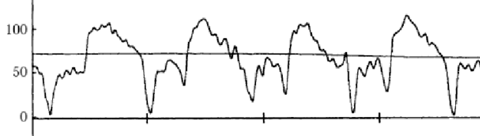
In 2026, surgeons performing vascular procedures still rely on decades-old tools — dye injections and contact probes — to assess blood flow. Neither shows how blood is actually flowing.
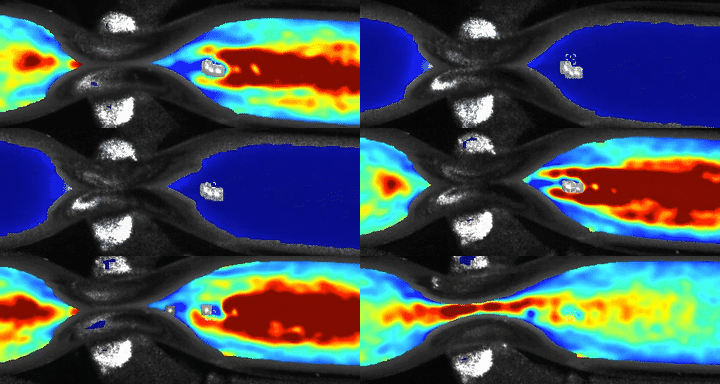
ViewFlow's proprietary 20-dimensional vision algorithm reads blood flow the way a weather system reads the atmosphere — revealing dynamics no existing tool can see, in real time.
ViewFlow targets the same surgeons, same workflow, and same operating rooms as Novadaq — but without requiring dye injection. The precedent is already set.
ViewFlow integrates into existing surgical workflows without the added step — or risk — of dye injection.
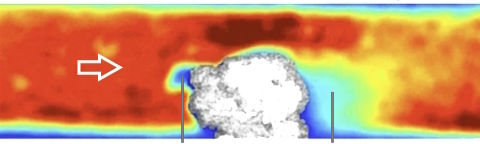
Beyond binary yes/no — ViewFlow captures vorticity, shear stress, and mass transport in real time.
Hemodynamic data powers reduced-order models to predict surgical outcomes before the patient leaves the table.
A rare intersection of quantum-level physics, FDA-path experience, and clinical obsession — backed by advisors from the nation's top surgical institutions.

Jim has spent his career making the invisible visible — from a NASA-funded fellowship at Duke developing nano-detection biosensors, to building cheminformatics platforms commercially licensed by Roche and Merck, to leading cybersecurity and IT operations for a federal national computing center at Lockheed Martin, where he also wrote $250M proposals to run other agencies' computing infrastructure.
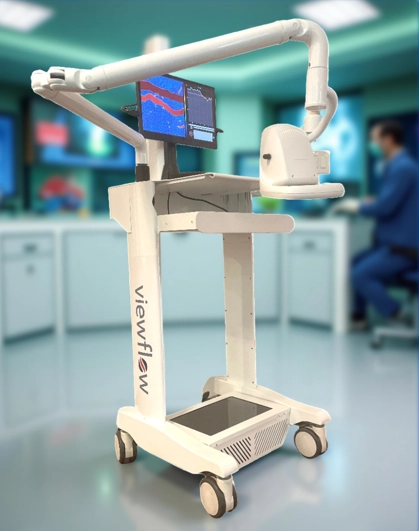
ViewFlow is the culmination of that work: an FDA surgical camera that shows surgeons how blood flows in real time — no dyes, no contact, no radiation. It replaces tools surgeons already buy with something faster, safer, and better. The last company in this space — Novadaq, which required dyes and chemical contact — sold to Stryker for $701M.
Jim earned his PhD in Electrical and Computer Engineering and MBA, both from Duke.
Engaging with leading academic medical centers to reduce patient complications and become a future standard of care.

Real clinical validation. Real surgeon demand. A proven market playbook with a fundamentally better product.